Veneto · Verified Guide
Wheelchair Accessible Venice — A Verified 2026 Guide
Venice has 435 bridges. That number stops most accessibility guides cold. But Venice is also one of the most surprisingly accessible historic cities in Europe — once you understand it. The city has installed motorised bridge ramps on key routes, the vaporetto water buses are step-free, and an entire 'accessible Venice' map has been mapped by the city itself. Knowing where to step on, where to step off, and which sestiere is genuinely roll-able transforms the visit from impossible to magical.
Quick facts
- Best season
- April–early June, late September–October
- Airport transfer
- Marco Polo (VCE) accessible water taxi €120-150, or land taxi + tram to Piazzale Roma €40
- Vaporetto accessibility
- All ACTV stops have ramps; lines 1, 2 and 5 are step-free
- Accessible districts
- San Marco core, Cannaregio main canal side, Giudecca waterfront
- Difficult districts
- Castello backstreets, much of Dorsoduro interior — many small bridges without ramps
Top accessible sights in Venice
What we've measured, verified or pushed a chair through ourselves.
- 01
St. Mark's Basilica
Step-free entrance via the side door on Piazzetta dei Leoni (staff escort). The main floor is accessible; the Pala d'Oro and the loggia upstairs are not. Free for wheelchair users + companion.
- 02
Doge's Palace
Lift access to all main floors via the accessible entrance off Piazzetta San Marco. Skip the famous Bridge of Sighs interior crossing (steps) — view it from outside instead.
- 03
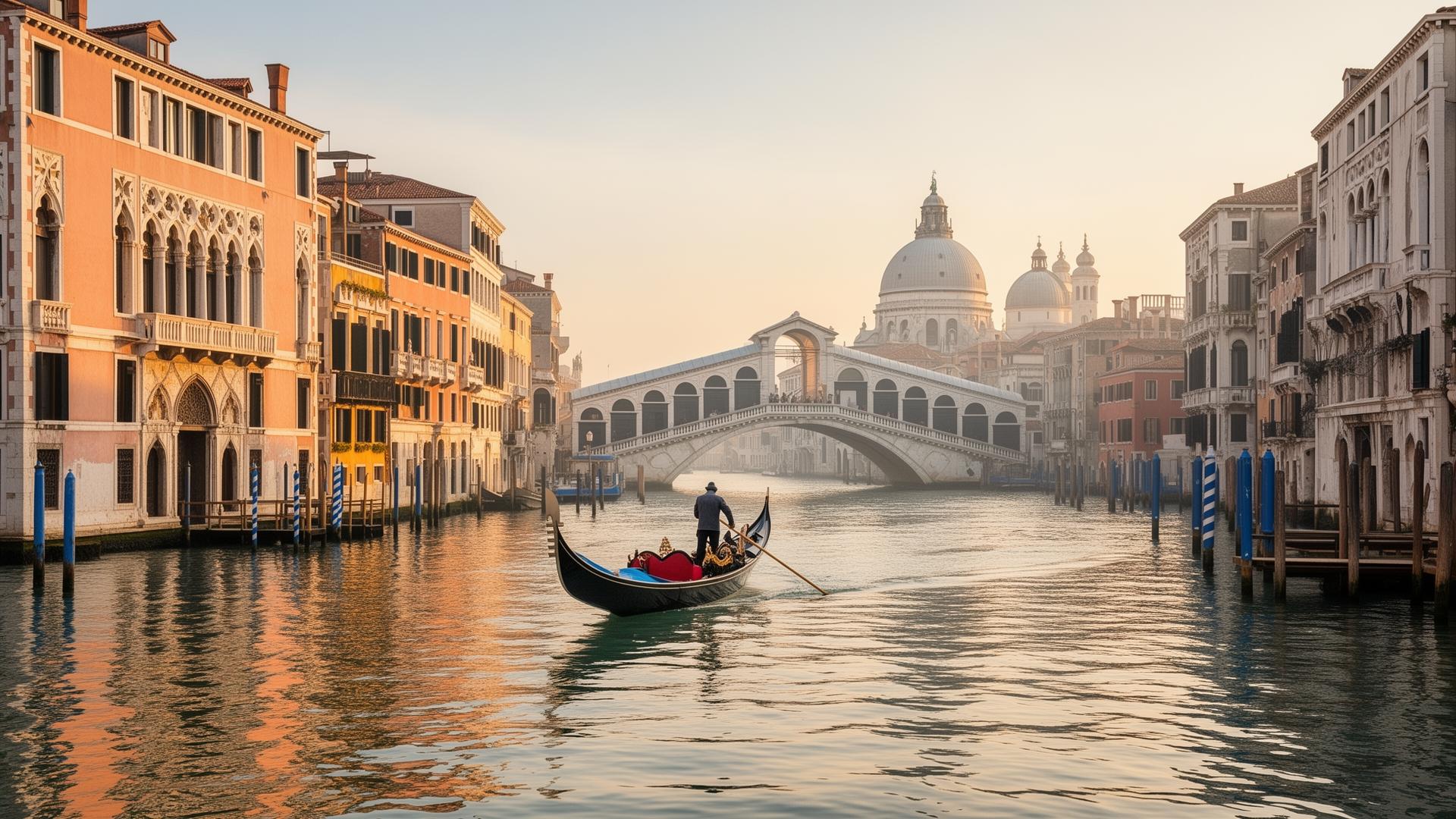
Rialto Bridge area
The Rialto Bridge itself has steps. To cross the Grand Canal nearby, use vaporetto line 1 or the 'traghetto' gondola crossings (NOT accessible) — best alternative is line 2 to San Tomà.
- 04
Murano (glass island)
Highly accessible — flat paving, wide promenades, accessible factory tours at Vetreria Artistica. Take vaporetto line 4.1 or 4.2 from Fondamente Nove.
- 05
Peggy Guggenheim Collection
Fully accessible via the garden entrance — lift to all floors, accessible bathroom, dedicated reception staff. One of Venice's best accessibility setups.
Where to stay in Venice
San Marco (waterfront)
Closest to vaporetto lines, smooth Riva degli Schiavoni promenade. Look for hotels with private water entrance — much easier than dragging luggage over bridges.
Giudecca
Wide waterfront promenade, fewer crowds, excellent vaporetto connection (line 2 to San Marco in 8 min). Several modern hotels with full accessible rooms.
Cannaregio (Strada Nuova)
Long flat main street, more local feel, closest to the train station. Good vaporetto access and modern accessible apartments.
Accessible restaurants & cafés
- ›Trattoria alla Madonna (San Polo) — step-free entrance, classic Venetian seafood
- ›Ristorante Quadri (Piazza San Marco) — fully accessible via lift, Michelin dining
- ›Osteria Bancogiro (Rialto) — flat canal-side terrace, accessible bathroom inside
- ›Skyline Rooftop Bar (Hilton Molino Stucky, Giudecca) — lift access, sunset views
Practical tips
- ●Buy the 'CartaVenezia' — discounted vaporetto pass for residents + disabled visitors; free for wheelchair users + companion on most lines
- ●Use the official 'Venice Accessible' city map — it marks every bridge with a motorised ramp
- ●Book a private water taxi at least once for the Grand Canal arrival experience — fully accessible with hydraulic lift
- ●Skip November high-water season unless you have waterproof gear and a power chair you don't mind getting wet
- ●Stay close to a vaporetto stop — every bridge you avoid saves significant energy
Frequently asked questions
Is Venice wheelchair accessible?
More than its reputation suggests. The vaporetto water buses are all step-free, San Marco and major museums have lift access, and the city has installed motorised ramps on key bridges. San Marco, Giudecca and Cannaregio's main streets are roll-able. Backstreets in Castello and Dorsoduro have many step-only bridges and are best avoided.
Are the vaporetto water buses accessible?
Yes. All ACTV vaporetto stops have step-free ramps, and lines 1, 2 and 5 use boats with level boarding for wheelchair users. Staff assist with the gangway when needed. Wheelchair users plus one companion travel free with the appropriate disability pass.
How do I cross Venice bridges in a wheelchair?
Many bridges on tourist routes now have motorised ramps that wheelchair users can request. The city publishes an official 'Accessible Venice' map showing every ramp-equipped bridge. For the Grand Canal, use vaporetto line 1 or 2 instead of the Rialto Bridge (which has steps).
Can I get from Venice airport to the city in a wheelchair?
Yes — two options. A private accessible water taxi with hydraulic lift takes you directly to your hotel's water entrance (€120-150). Cheaper: take a land taxi or the accessible tram T1 to Piazzale Roma (€10-40), then transfer to a vaporetto. The water taxi is worth it once, even just for the arrival experience.
Need this verified for your trip?
We verify accessibility details for the exact hotel, restaurant or experience you want — measurements, photos, video. Before you pay anything.
Start a verification