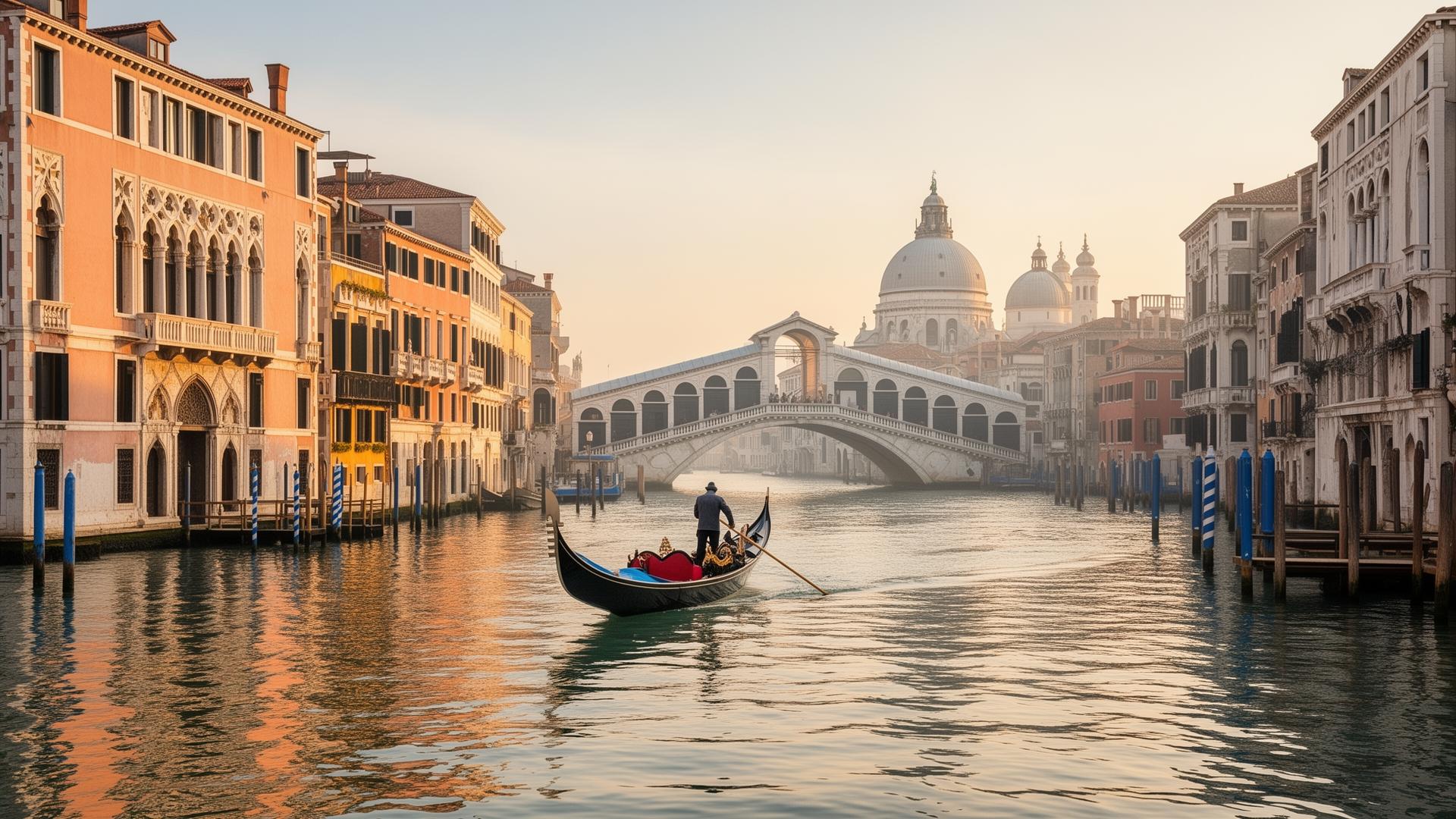
Venice's reputation as a wheelchair-impossible city is half wrong. Yes, there are 435 bridges and most have steps. But the city has done more accessibility work than almost anywhere in Italy: motorised bridge platforms, free vaporetto access for wheelchair users, and an official accessible-route map that connects the main tourist sights without a single step.
The vaporetto is your subway
Every vaporetto stop in Venice is wheelchair accessible. The platform floats, so it's always level with the boat door. Wheelchair users and one companion travel free with a Venezia Unica card (request the disability tariff). Lines 1 and 2 cover the Grand Canal — your main route between the train station, Rialto, and San Marco.
Which bridges have ramps
The Venice municipality has installed permanent ramps on bridges along the official accessible routes around San Marco, Rialto and the train station. A few key bridges have motorised stair-climber platforms operated by staff. You can request the activator key from the tourist office at Piazzale Roma.
The accessible districts
San Marco, Cannaregio (Jewish Ghetto), Dorsoduro (Accademia, Peggy Guggenheim) and Santa Croce are largely accessible via ramped or stepless routes. Castello and the deep parts of San Polo require more bridge crossings.
Islands that work
Murano is fully accessible — flat, ramped vaporetto, wide pavements. Burano is partially accessible (the central streets are flat, some bridges have steps). Lido is the most accessible: wide flat streets, accessible beach access points.
Where to stay step-free
Hotels on the Riva degli Schiavoni waterfront, near Piazzale Roma, or on the Lido are reachable directly from the vaporetto without bridge crossings. Always confirm the hotel itself is step-free at the door — many historic palazzi have a single step that listings don't mention.
Frequently asked questions
Is the vaporetto really free for wheelchair users?
Yes, a person with a recognised disability and one companion pay a reduced rate of €1.50 per 75-minute ticket, or get a free Venezia Unica disability card on arrival.
Can I get from Venice Santa Lucia train station to San Marco without crossing steps?
Yes. Take vaporetto line 1 or 2 directly from the Ferrovia stop to San Zaccaria (San Marco). Both stops are step-free and the boat is level with the platform.
What about water taxis?
Water taxis are private and expensive (€80-150 per trip) but many have wheelchair access via a ramp at the rear. Confirm when booking — not all boats are equipped.
Are the accessible-route maps reliable?
Yes, the official maps from the Venice municipality are accurate and updated. Pick one up at any tourist info point or download from the city's accessibility portal.