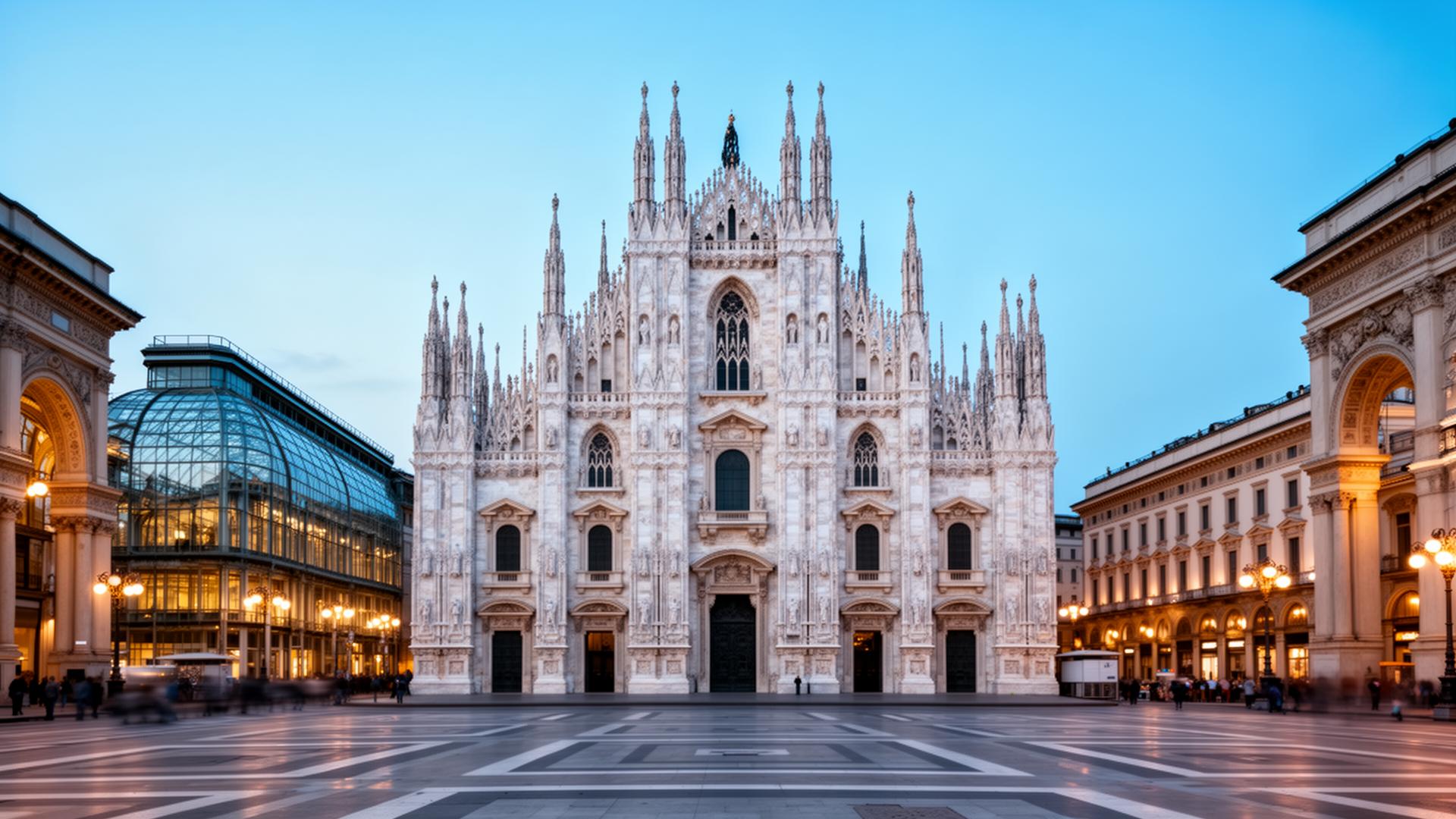
Milan is the softest landing in Italy for anyone who needs step-free travel. The city was largely rebuilt in the nineteenth century around wide, flat streets, and its newest districts are designed to modern accessibility standards. Most of the planning work here is not about whether something is possible — it is about sequencing the day so you are not crossing the city twice.
Getting around Milan
- Metro lines M1, M3 and M5 are fully accessible at all stations; M2 is only partially accessible — check lift status in the ATM Milano app before you set out
- Trams of the 7000 series have ramps; the historic orange trams do not
- Street surfaces in the centre and in Porta Nuova are flat and smooth, unlike most Italian historic centres
- Wheelchair-accessible taxis and vans exist but are a small fleet — pre-book rather than hailing
What to see without fighting the city
Duomo and the rooftop
The cathedral nave is step-free and the rooftop terraces are reachable by a dedicated lift — book the lift-access ticket specifically. Admission is free for wheelchair users plus a companion.
The Last Supper
The Cenacolo Vinciano is fully accessible: step-free entrance, lift, flat viewing room. Slots are limited, so book roughly three months ahead and use the accessibility line for priority slots.
Galleria, Sforza Castle and Navigli
The Galleria Vittorio Emanuele II is flat marble throughout. Sforza Castle has lift access to the main museum sections including the Pietà Rondanini, and flat courtyards. The Navigli canal promenade is mostly flat — cross on the main bridges rather than the small stepped ones.
When to go, and when not to
- April to June and September to November are the comfortable windows
- Milan Design Week in April and the February and September fashion weeks roughly double hotel prices and empty accessible inventory
- In August many independent restaurants close; larger venues stay open
Milan as a base
Milan is the best home base in Italy for accessible day trips. Lake Como is reachable by accessible train or a pre-booked accessible van, and Bergamo and Verona are realistic day trips by train with assistance booked in advance. We publish only what we have confirmed ourselves or what an operator has stated directly to us. Anything that is not verified for your specific dates, room or vehicle is planning guidance, not a guarantee — our concierge confirms the details in writing before you commit.
Frequently asked questions
Is Milan wheelchair accessible?
Milan is the most wheelchair-accessible major city in Italy. The centre has wide, flat grid streets, metro lines M1, M3 and M5 are fully accessible, and the Duomo rooftop, Last Supper and main museums all have step-free access with free entry for wheelchair users plus a companion.
Is the Milan metro accessible?
Lines M1, M3 and M5 are fully accessible at all stations. Line M2 is partially accessible, so check the ATM Milano app for working lifts before travelling. Trams of the 7000 series have ramps; older orange trams do not.
How many days do I need in Milan?
Two to three days covers the Duomo and rooftop, the Last Supper, the Galleria, Sforza Castle and an evening in the Navigli at a comfortable pace, with the metro doing the long legs.
Can I visit Lake Como from Milan in a day?
Yes. Lake Como is a realistic accessible day trip from Milan by train with assistance booked in advance, or by pre-booked accessible van. Step-free car ferries then connect the lakeside towns.